
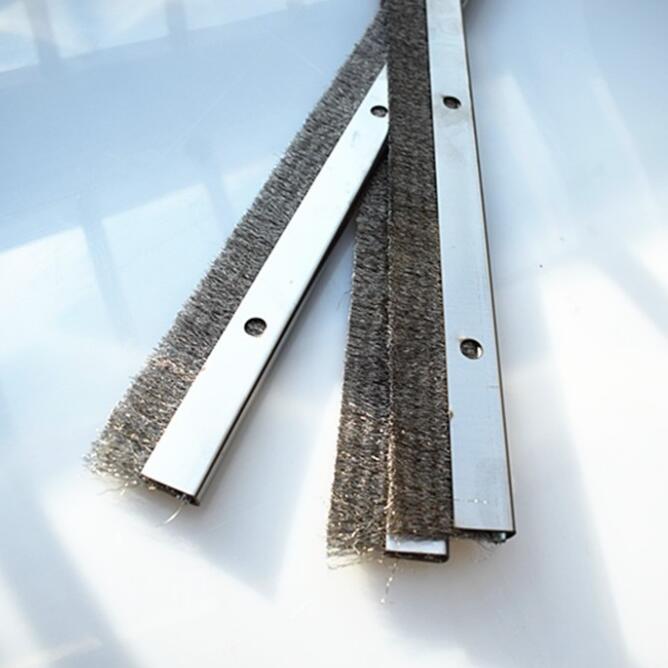
A telescopic steel cover protects the ways of a CNC machining centre, but the cover itself needs protection at every joint where it slides. Chips fall into the gaps, coolant wicks along the ways, and way lugs wear from abrasive contact. A strip brush mounted along the cover edges closes those gaps flexibly — and it is one of the cheapest components on the machine with the highest cost of getting wrong.
Why Brushes Beat Rubber Wipers on Machine Tools
Rubber wipers seal tighter at first contact, but on a machining centre they fail in weeks: hot chips cut the lip, coolant swells the compound, and a hard lip drags on the cover surface. Bristles tolerate the same abuse because they present thousands of flexible points instead of one continuous edge. Chips are swept aside rather than trapped, and the brush keeps sealing as the cover surface wears.
Specifying the Brush for a Cover Application
Four parameters define the fit:
1. Channel profile. F-type (flat back) is the default for screw-fixing along cover edges; H-type slides into a retaining track for tool-free replacement during service.
2. Bristle material. Standard polypropylene handles emulsion coolant and aluminium chips. For hot chips from high-speed steel cutting, use heat-resistant bristle rated above the chip temperature. Stainless channel is standard on machines running aggressive coolant.
3. Bristle length. Enough to contact the cover with slight compression, typically 10–15 mm of engagement. Too long and the brush folds back under sliding pressure; too short and it stops sealing as the machine bed wears.
4. Backing strip. The galvanised or stainless steel strip bonded into the channel. On machine tools, stainless backing plus stainless channel is worth the small premium — the brush outlives two sets of bristles.
Retrofit and Replacement
Machine tool builders design covers around specific brush dimensions, but the after-market works differently: measure the old brush channel width, bristle trim and total length, and a brush manufacturer can reproduce the assembly directly. Because strip brush is produced from standard tooling, one-off replacement sets are economical — you are not paying for a special production run.
For machine builders, ordering cover brushes together with the machine’s other brushes (chip wipers, spindle seals) in one factory order reduces both cost and part-number sprawl.
Maintenance Notes
- Inspect bristle length at every coolant change; replace when tips wear below ~60% of trim length.
- A brush that stops sweeping chips sideways usually has matted or melted tips — upgrade material, not pressure.
- Keep spare brush stock per machine model; brushes ship flat and store in almost no space.
Order replacement brushes: Strip Brush product page · Custom brush OEM service
